
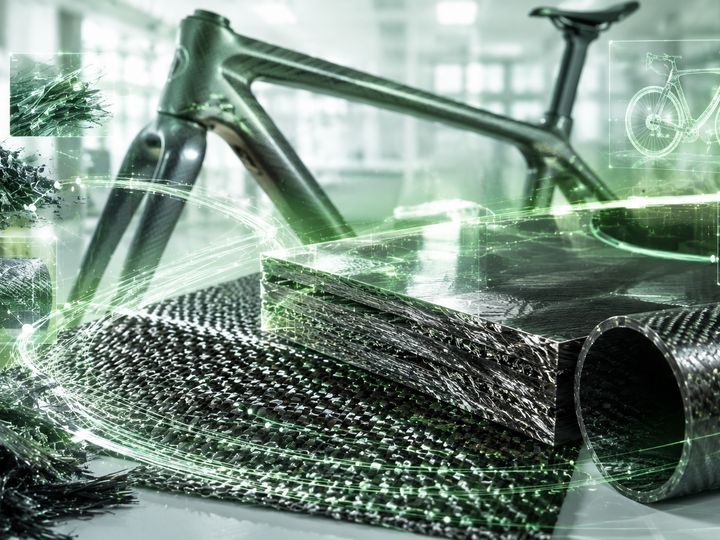
rCF4Sports
Circular carbon fibers for sports
Circularity of carbon fibers for sports applications.
R-strategies include sharing, leasing, reuse, repair, refurbishment, remanufacturing and recycling. They aim to keep recoverable materials and components in the economy and create new value through reuse or further use.
The appropriate strategy depends on the component and its application. It should take account of material content, accessible data, product design, expected service life, and innovation and replacement cycles. Materials may also be used for different purposes across sector boundaries. Projects addressing recycling alone were not eligible for funding.
In this way, R-strategies turn the guiding principle of the circular economy into concrete decisions in product design and operations. For companies, the main questions are:
Funded projects related to this topic.
Circularity of carbon fibers for sports applications.

Re-use hubs for building services engineering.