

HYCLUS

Circular Electrolyser Systems for the Energy Transition

HYCLUS develops a closed-loop system for electrolyser systems that connects production, use and the return of components into the manufacturing process. Through digital connectivity and new reuse and refurbishment strategies, resources can be used more efficiently and sustainable energy systems can be supported.

Details
HYCLUS
Joint Project

HYCLUS

Circular Manufacturing Ecosystem for Advanced Electrolyser Systems

Members1
Founded2026
UnitCircle4Value

Project Lead

  • Dr.-Ing. Ulrike Beyer

    Dr.-Ing. Ulrike Beyer

    Fraunhofer-Gesellschaft zur Förderung der angewandten Forschung e. V.

Motivation

Electrolyzers are central to the production of green hydrogen and, therefore, to the energy transition. However, their widespread industrial application is limited by high costs, material-intensive manufacturing, and a lack of circular economy approaches.

Furthermore, digital connectivity along the value chain has so far been insufficiently developed. As a result, potential for scaling, resource efficiency, and economic value creation remains largely untapped. There is therefore a need for integrated, circular, and digitally supported production approaches.

Goals and Approach

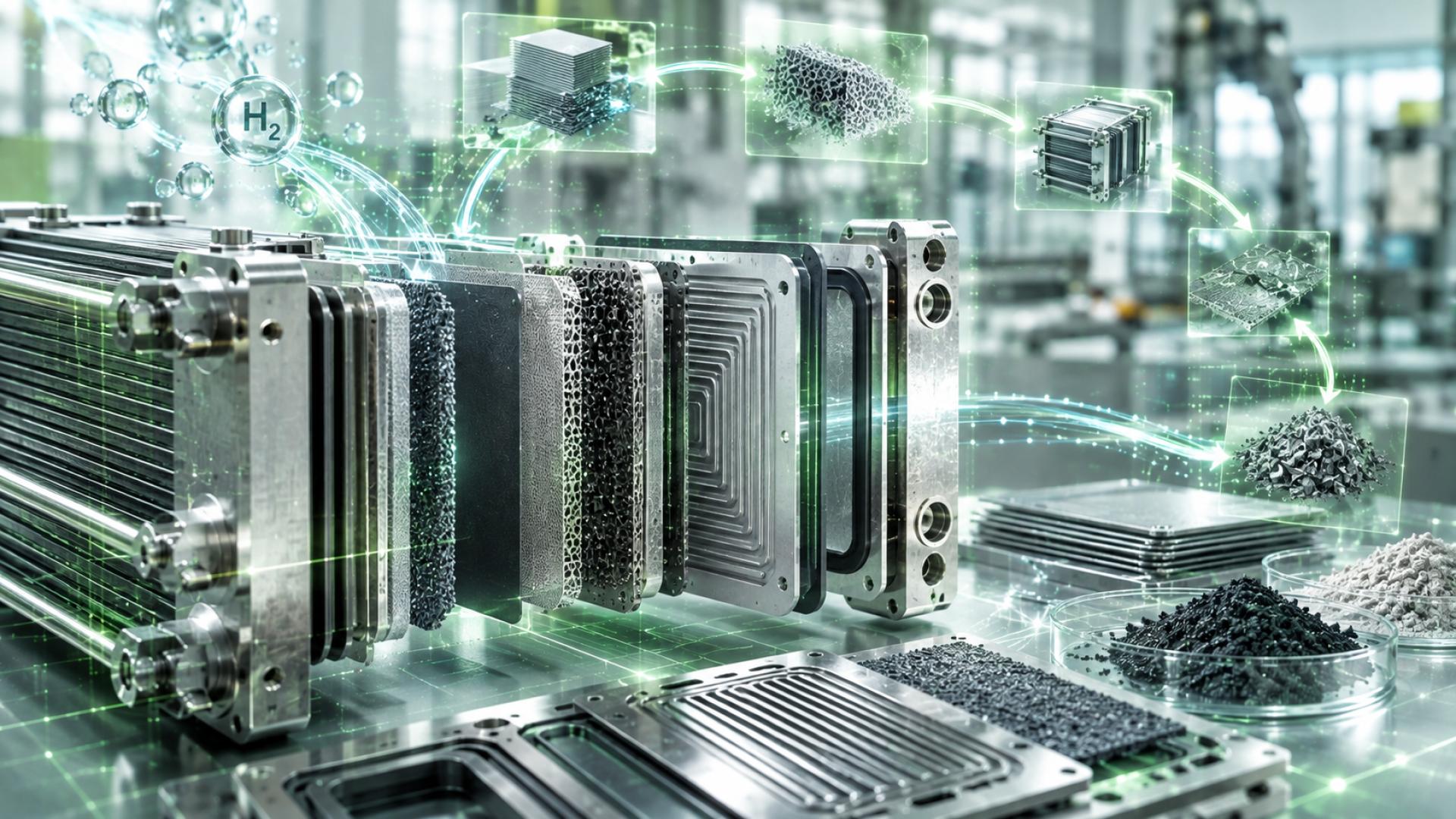
The goal of the Eureka research project HYCLUS is to develop a closed-loop system for PEM electrolysers that encompasses the production, use, and return of components and semi-finished products to the manufacturing process.

The technological foundation is the HyVentus electrolyzer developed at Fraunhofer IWU, which serves as the basis for a digitally networked production process for all components and their automated assembly into a stack. Using existing machinery and equipment, a data integration system is being developed that consolidates all relevant information in real time and utilizes it for the optimized manufacturing of the advanced HyVentusC electrolyzer solution. This solution will be evaluated from a techno-economic perspective and made viable for commercial application through suitable business models. Realistic aging tests will also be conducted up to the point of cell failure, and components will be characterized with regard to reuse, refurbishment, remanufacturing, and recycling.

Innovations and Prospects

For the first time, this approach combines circular production models with end-to-end digital integration for electrolyzer systems, thereby specifically targeting reductions in costs, materials, and waste.

The project is expected to yield significant savings in costs, raw materials, and waste. The results are transferable to other energy systems, such as fuel cells, and open up new opportunities for industrial value creation.

Acronym

HYCLUS

Project Type

Eureka Collaborative Project

Project Period

01 September 2026 to 31 August 2029

Sector / Application Area

Hydrogen Technology

Topics

Hydrogen Technology, Circular Economy, Digitalization

R-strategies

Reuse, Refurbish, Remanufacture

CircularGlowUp
Funded by the Federal Ministry of Research, Technology and Space