
ReKuMet

Metal repurposing

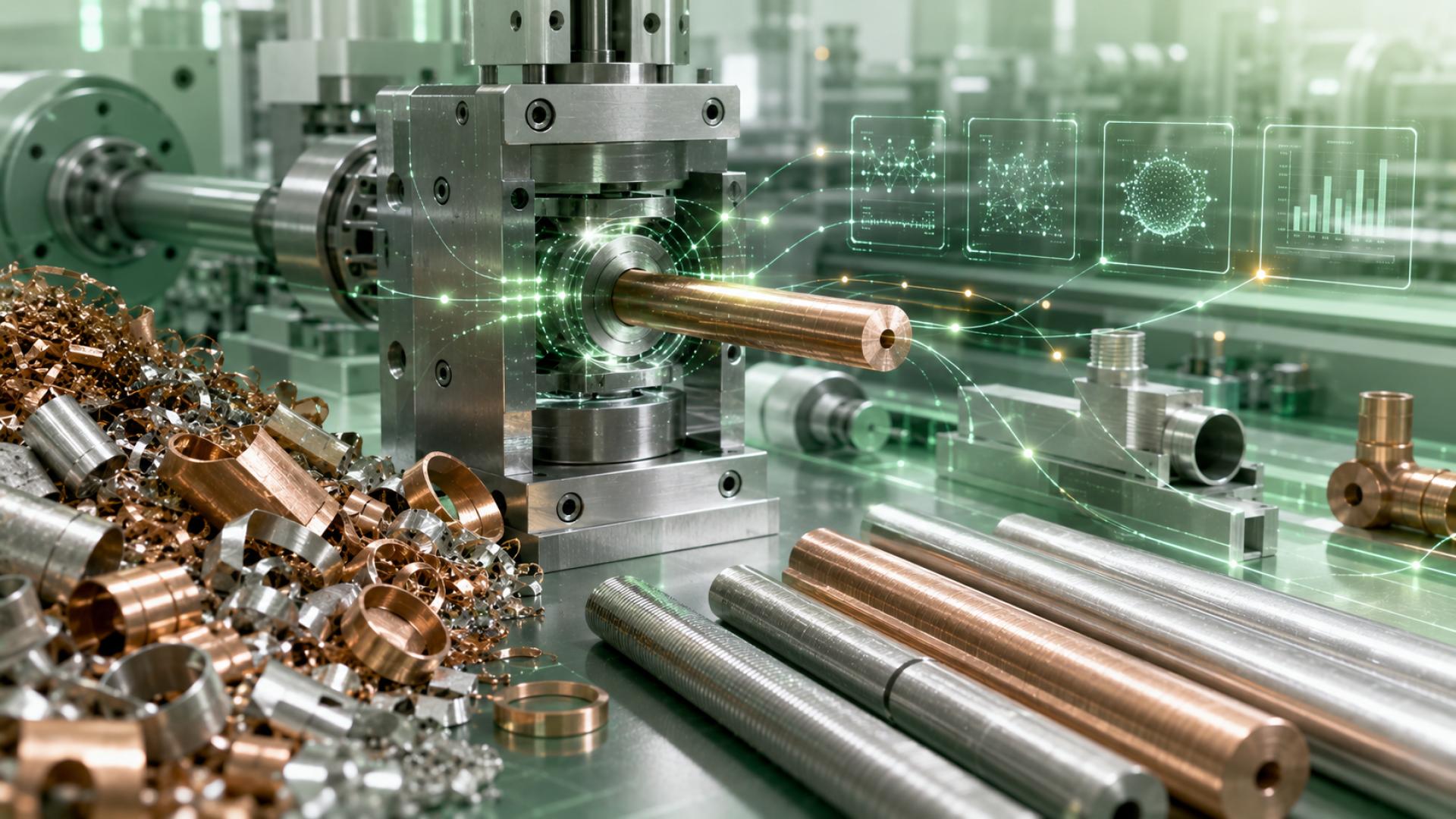
Until now, metal production scrap has usually been melted down, which is energy-intensive. ReKuMet is developing process chains that use cold forming to turn this scrap into new semi-finished and finished products, and that ensure their quality with sensors, inline testing and digital product data.

Details
Joint Project

ReKuMet

Repurposing Metallic Waste Materials Through Cold Forming

Project Lead

  • Dr. Nadezda Missal

    Dr. Nadezda Missal

    Felss Systems GmbH

Motivation

In the metalworking industry, the manufacture of products generates significant amounts of production scraps and offcuts. Until now, these have mostly been collected, sorted, and melted down in an energy-intensive process.

Currently, there is no way to reuse such scrap materials industrially without melting them down. One promising approach is repurposing, in which waste materials are upcycled into new semi-finished products or finished goods through cold forming and joining processes. A particular challenge is the varying material quality from heterogeneous waste sources, as well as contamination.

Objectives and Approach

The goal of the ReKuMet research project is to develop and validate repurposing process chains for metallic production residues. To this end, a process is being developed that transforms waste products into new, prefabricated raw materials using cold forming methods such as round kneading.

These can then be further processed into new products. Feasibility is being investigated using demonstration components, such as copper fittings or aluminum housings. To ensure product quality based on data and reliably manage fluctuations in the quality of residual materials, sensor technology, inline inspections, and data-driven analyses are being adapted and evaluated. Material and process data can thus be documented throughout the value chain via a product data passport and utilized for data-driven process control.

Innovations and Prospects

Eliminating remelting processes opens up the potential to significantly reduce energy consumption, emissions, and transportation costs.

Looking ahead, companies will be able to process metallic production residues in a more targeted manner within their own value-added networks or in regional cycles. The technical and economic feasibility of this approach is being validated for the first time in the project—in production and on an industrial scale—and can be extended to other areas of application.

Acronym

ReKuMet

Funding program

CircularGlowUp

Framework

Eureka

Project type

Eureka collaborative project

Project period

1 July 2026 to 30 June 2029

Status

Starting in 2026

Sector / application area

Metalworking, forming technology, copper and aluminum processing

Topics

Circular value creation, R-strategies, digital product passports, data ecosystems and AI

R-strategies

Remanufacturing, recycling

CircularGlowUp
Funded by the Federal Ministry of Research, Technology and Space