TransCCoDe

CoDesign for the Circular Economy

TransCCoDe develops methods that enable products and production systems to be designed together for circular use. By combining digital product passports, automated testing procedures, and new business models, the project creates scalable solutions for reuse, refurbishment, and remanufacturing.

Details

Motivation

To enable products to go through multiple life cycles, product design and production systems must be jointly aligned with circular use.

As early as the design phase, consideration must be given to disassembling products in a meaningful way, inspecting them, and preparing them for reuse, refurbishment, or remanufacturing, among other things. Production systems must be integrated through a co-design approach to efficiently support these processes.

Goals and Approach

The goal of the Eureka research project TransCCoDe, which involves partners from Denmark, Austria, and Sweden, is to develop a co-design approach for scalable industrial applications in the circular economy.

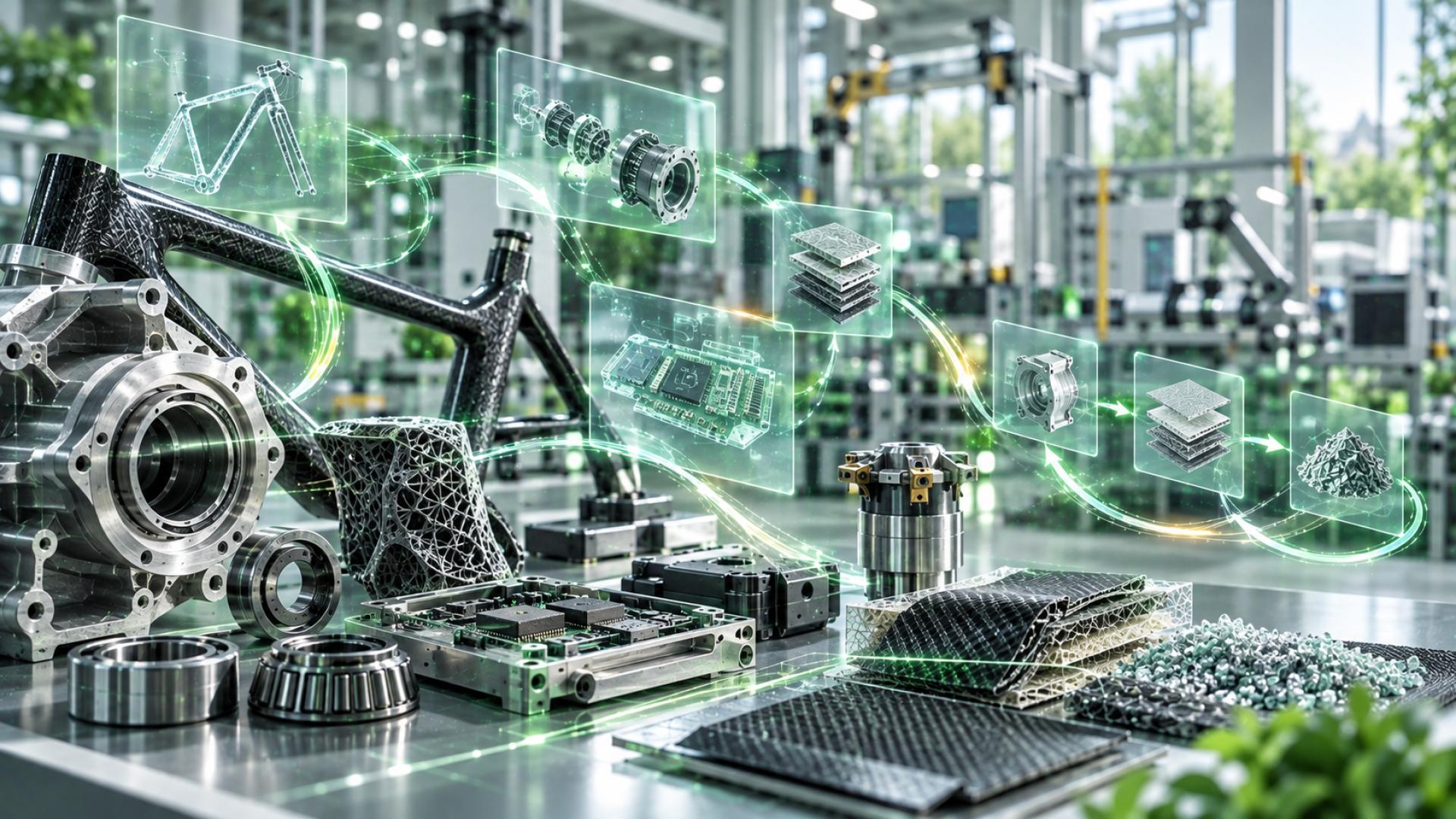
To this end, portfolio and network planning for circular value creation are being developed, methods for the simultaneous design of product and production systems are being devised, and automated functional tests and data-driven quality control loops for assessing reusability are being established. This results in a methodology that can anchor co-design in the circular economy, supplemented by digital product passports and appropriate business models. These approaches are validated in several use cases, such as electronics testing, bicycle refurbishment, and the remanufacturing of tools and production equipment. Implementation ranges from proof of concept to demonstrators and pilot applications and is transferable to various industries.

Innovations and Prospects

The CoDesign approach integrates product and production with the selection of appropriate R-strategies and, through digital product passports, enables end-to-end data availability across multiple life cycles.

This reduces testing efforts, shortens changeover times, and increases the use of secondary materials. Companies can better plan take-back processes, design production systems more flexibly to accommodate different product states, and develop new circular business models as well as more efficient service processes. In this way, the project contributes to the establishment of a circular economy.

Acronym

TransCCoDe

Project type

Eureka Collaborative Project

Project period

01 September 2026 to 31 August 2029

Sector / application area

Industrial Manufacturing

Topics

CoDesign, Circular Economy, Digital Product Passports

R-strategies

Reuse, Refurbish, Remanufacture

CircularGlowUp
Funded by the Federal Ministry of Research, Technology and Space